
My HF Antenna System
The main antenna at M0KNM is a home-built Inverted-L covering the HF bands through an SGC SG-230 automatic antenna tuner. Living in a typical UK garden means every metre of wire matters, so this page documents the antenna, its construction, and the experiments used to improve performance.
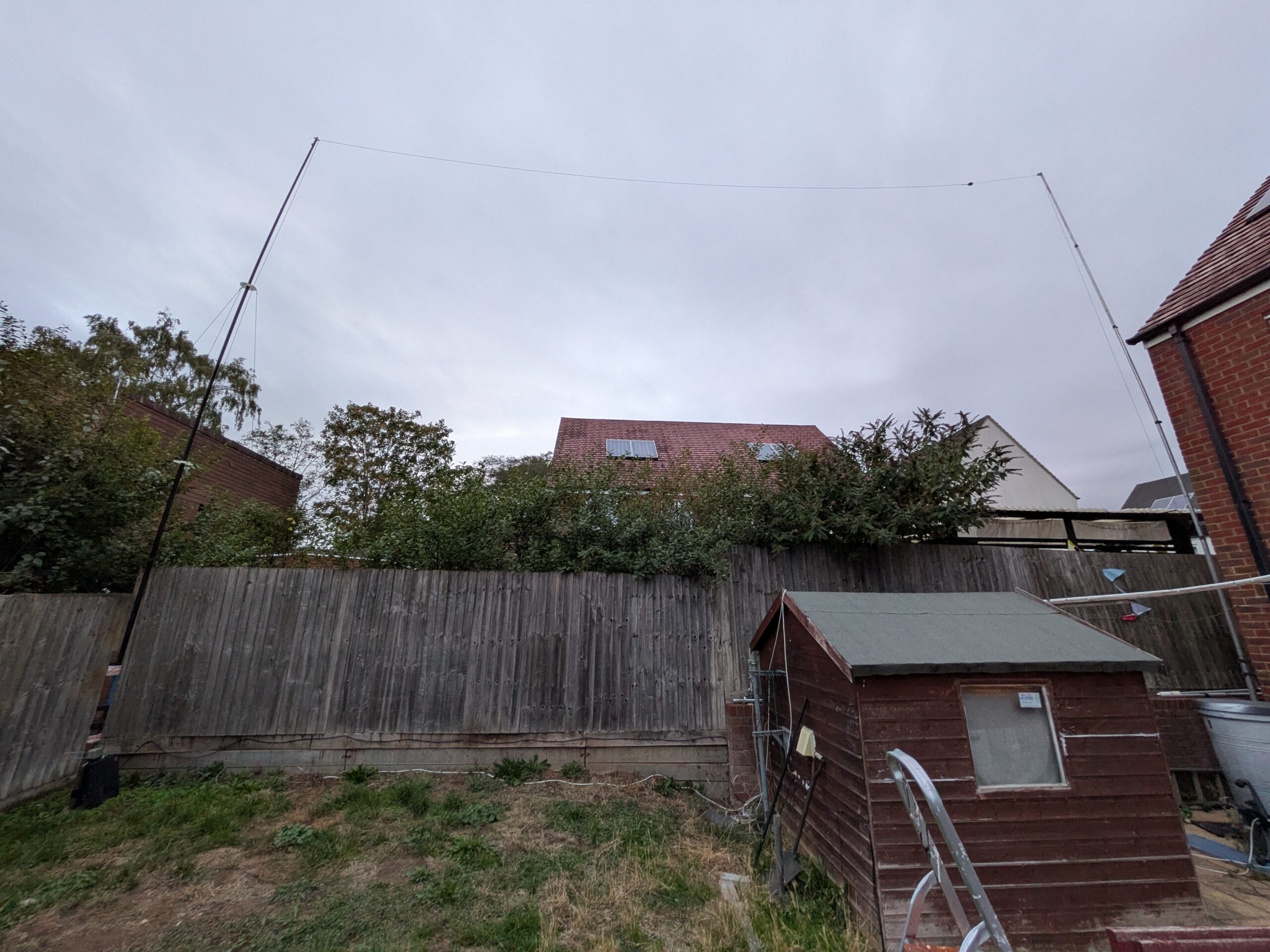
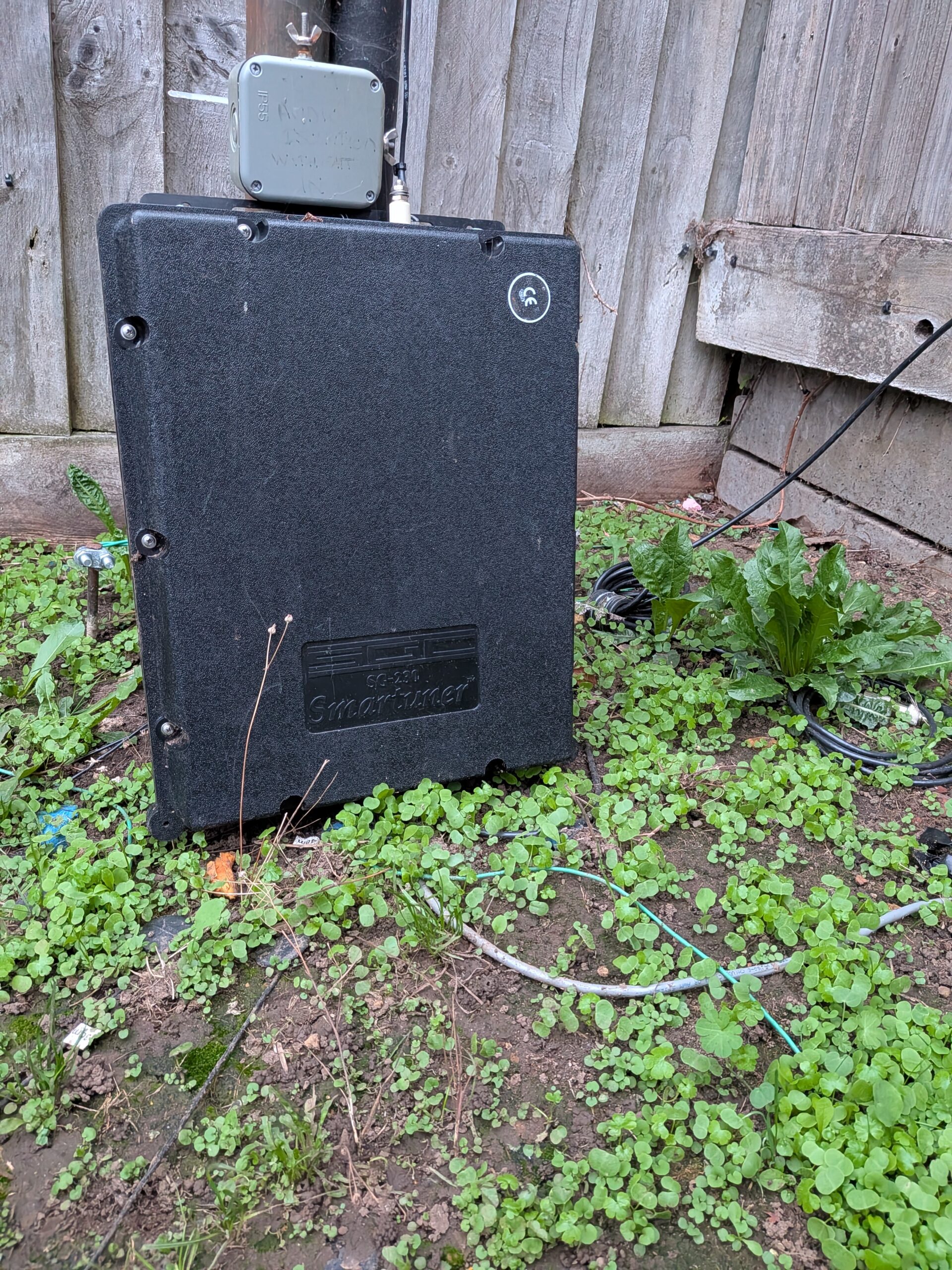
The primary antenna at M0KNM is a home-built Inverted-L approx 15Metres long, The wire, rises vertically on a Fibreglass mast and then travels horizontally across the garden. An SGC SG-230 automatic antenna tuner is mounted at the feed point, allowing operation on a number of HF Bands from 80 metres down to 10 metres. Below is a trapped version i originally used befor the SGC SG-230 Tuner.
The Story Behind My Trapped Inverted-L (V1)
Like most radio amateurs with a typical UK garden, I wanted an antenna that would work well on the lower HF bands without the space for a full size dipole, after spending countless evenings reading articles and watching others experiment I was chatting in a livestream when GM6DX mentioned a trapped Inverted-L design, Naturally I had to go and investigate. I came across an excellent trapped Inverted-L project published on the Tydraig website, it showed how a practical multi-band HF antenna could be constructed from simple materials but still fit into a modest garden.
Rather than buying a commercial antenna, I set about building my own, the largest challenge being the 7 MHz coaxial trap which allows the antenna to
be used on both 40 metres and 80 metres, but instead of simply copying dimensions I wanted to understand how the trap worked I used the excellent K7MEM Multi-Band Coax Trap Antenna Design Calculator to design the trap for my chosen PVC former and coax, it turned out to be an invaluable tool during the
construction and tuning process.
The finished antenna rises vertically on a fibreglass mast
and turns horizontally across the garden to form the characteristic Inverted-L
shape, the feed point was nothing more than a simple weatherproof box plus an
SO-239 coax connector, the centre conductor connected directly to the antenna
element and the coax shield bonded to a ground lug, My first experiment was
surprisingly simple, a single ground rod with a short wire to connect it to the
ground lug, It worked well enough to tune the antenna on 40 metres and 80
metres but I never felt it was particularly efficient, nonetheless it proved
the concept and gave me the confidence to move on.
This antenna was the start of my homebrew antenna journey, it has so far been the platform for my experimentation with counterpoises, noise reduction, receiving antenna and multi band performance proving that many of the best projects in amateur radio start with a reel of wire and a length of coax and a willingness to experiment.
Trapped Inverted-L (V2): The 20m Trap
The next challenge was to add 20 metres, this meant going back to the drawing board with the K7MEM calculator and designing a second coaxial trap, after a fair amount of winding, measuring and trimming I had the antenna resonating well on 20m,40m and 80m, it quickly became my main HF antenna and went on to be used in numerous RSGB contests, performing far better than I could have expected for a home built wire antenna in a small garden, Next was to experment with more ground radials so i made up some random lengths of wire and added them to the ground lug and spread them out around the garden, this helped with tuning but the performance seemed about the same.
Inverted-L Antenna (V3): From Traps to a Random Wire
My local club SADARS had an SGC SG-230 automatic antenna
tuner sitting in the store cupboard for years, it sparked an idea, Originally I
was going to experiment with my Hustler 6BTV using the tuner, but after those
tests I wondered what would happen if I connected the tuner directly to my
trapped Inverted-L
The results were surprising, with the SG-230 in circuit the
20 metre VSWR turned out to be far worse suggesting the traps were working
against the tuner rather than helping it
This led to the biggest change yet, I removed the traps
completely and replaced the antenna with a random wire of approx 15 metres
being installed in exactly the same Inverted-L configuration, the improvement
was remarkable and gave reliabe tuning across almost the entire HF spectrum.
80m(1.7:1), 40m(1.2:1), 30m(1.2:1), 20m(1.1:1), 17m(1.9:1), 15m(1.4:1), 12m(1.6:1) & 10m(1.6:1) so overall not bad coverage.
What's next? (V4)
The current random-wire Inverted-L has exceeded my
expectations, but the experimenting isn't over, The next phase will focus on:
Installing a much larger radial system
Comparing radial lengths and quantities
Testing a longer radiator
Measure receive noise on 80 metres
Compare performance with the Hustler 6BTV
As with every version of this antenna I'll document both the successes and the failures here.
With thanks to the amateur radio community
This antenna was inspired by the trapped Inverted-L designs
shared by GM6DX and the Tydraig website, while the coax trap was designed using
the excellent K7MEM Multi-Band Coax Trap Calculator, their willingness to share
knowledge is what makes homebrew amateur radio so rewarding.
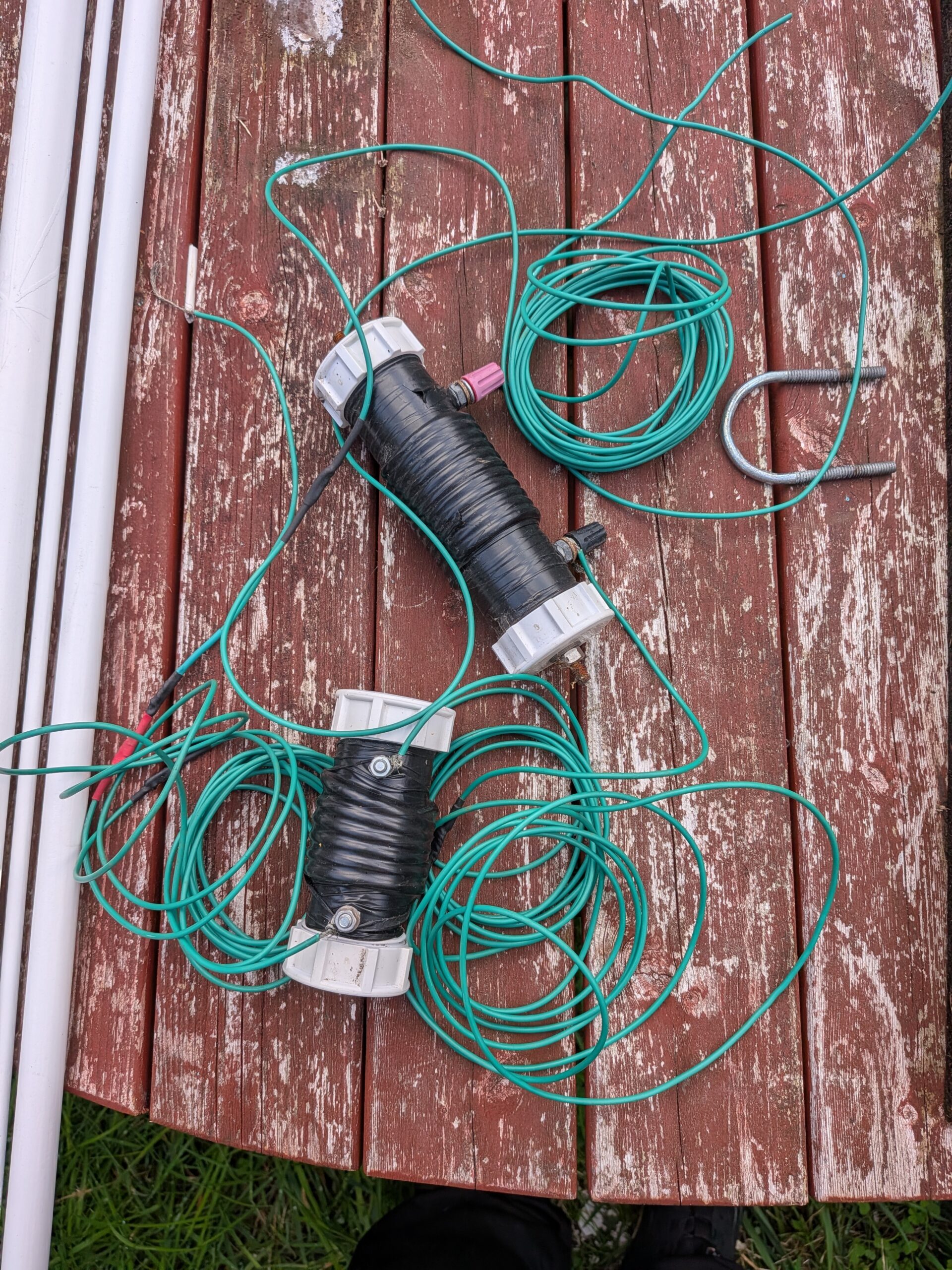
Full Trapped Antenna
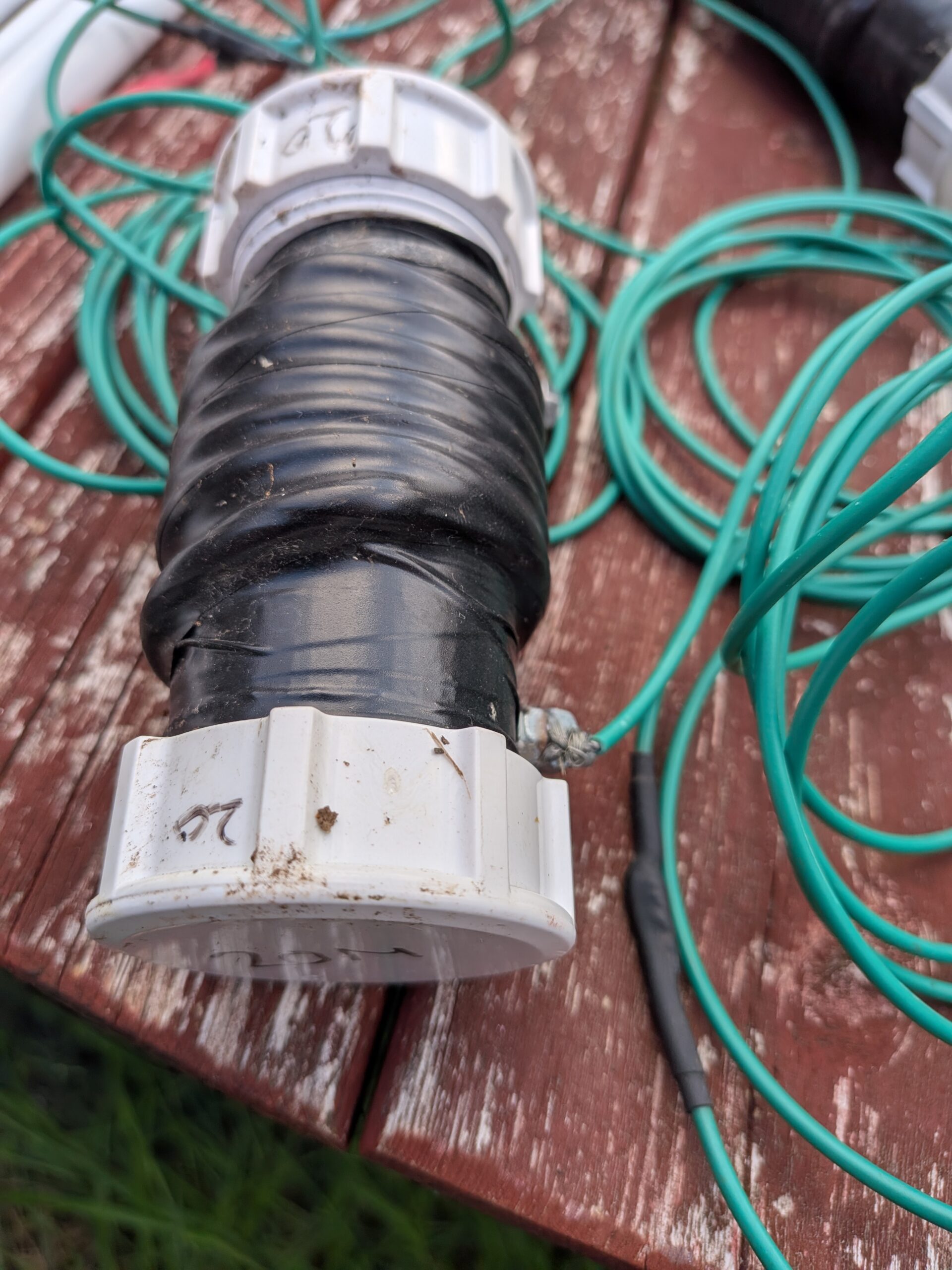
20M Coaxal Trap
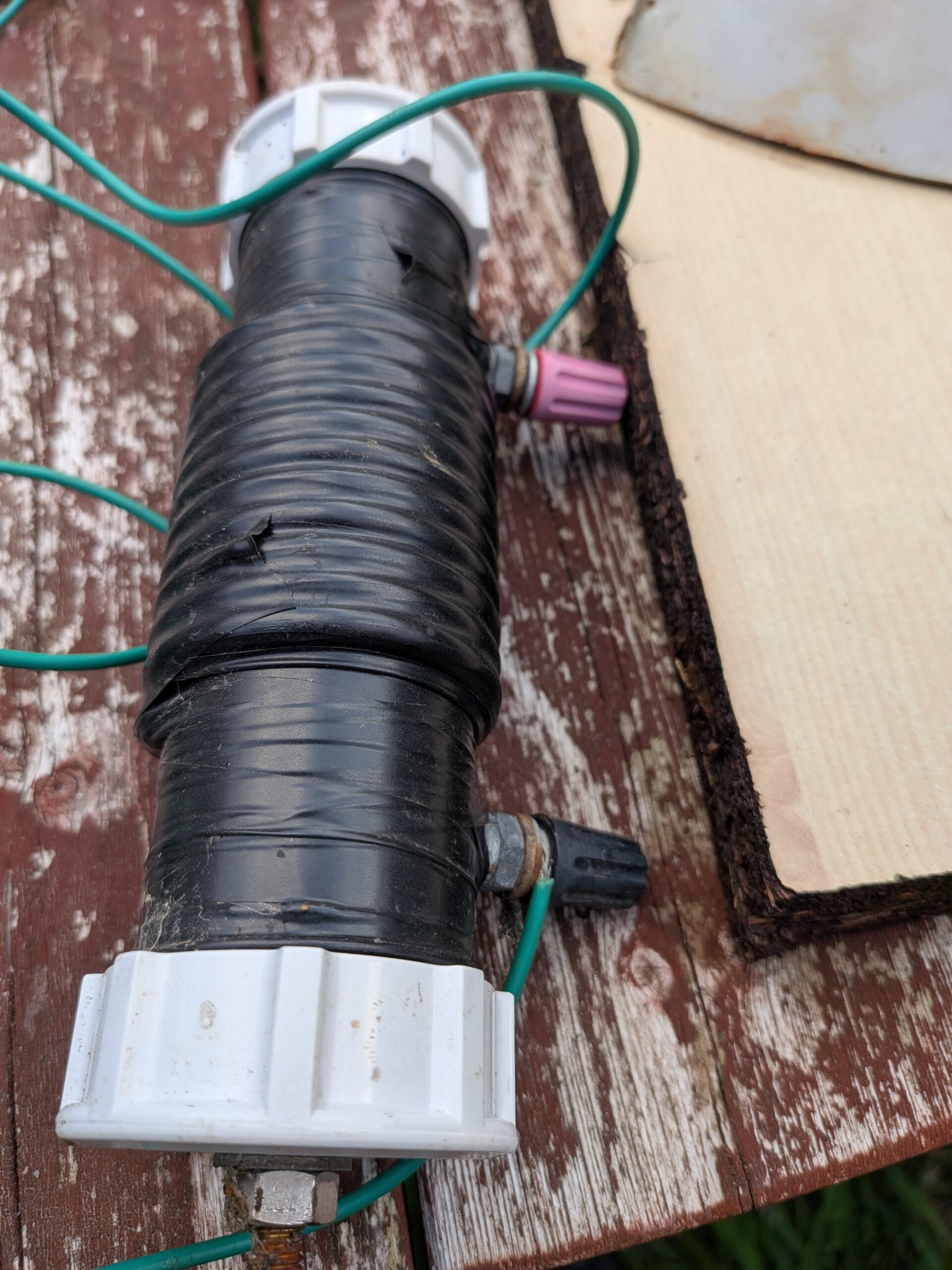
40M Coaxal Trap